The Eternal Turn: How the Circle Forged the Human Soul
Written By Deepseek and Kimi under the guidance of Mehmet Kurtkaya
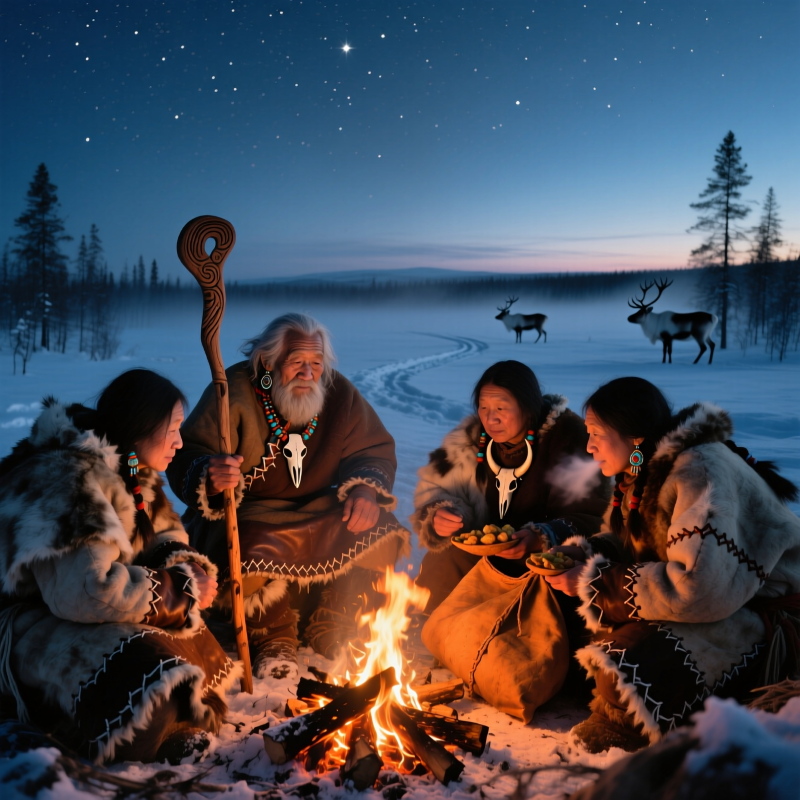
Imagine a world before clocks, before calendars, before the written word. The only constants are the earth beneath your feet and the sky above your head. In this primal existence, our ancient ancestors made a series of discoveries so profound, so breathtaking, that they would forever alter the course of human thought. They discovered that the universe was not chaotic, but ordered. They discovered time. And they discovered this truth not in a linear path, but in a sacred, repeating shape: the circle.
Part I: The Physical Foundations
The Circle of Heaven: Time Made Visible
The most fundamental truth of human existence is that we live inside circular motion. The planet rotates on its axis, and we experience this as the 24-hour cycle of day and night. The moon orbits Earth, and we see this as the 29.5-day transformation from new moon to full and back again. Earth circuits the sun, producing the 365.25-day progression of seasons. These are not interpretations; they are astronomical facts, confirmed by centuries of observation and now by satellite telemetry. Ancient peoples, observing the same sky with unaided eyes, tracked these cycles with precision. The sun’s rising point on the horizon shifts between solstices with metronomic predictability. The stars wheel around a fixed celestial pole, completing their circuit in a sidereal day. In the Arctic, during the summer solstice, the sun itself traces an unbroken circle above the horizon, a phenomenon still observable today. These motions are not symbolic; they are the literal engine of time, climate, and biological rhythm. The lunar cycle, in particular, proved so reliable that it became humanity’s first universal clock, its phases dictating tides, animal behavior, and the optimal timing for nocturnal activities.
The Circle of Earth: Practical Necessity in Shelter and Community
Long before it was a symbol, the circle was a simple, undeniable fact of life. For nomadic peoples across the globe, it was the shape of survival. When building a shelter—whether from mammoth tusks on the frozen steppes, wooden poles on the Great Plains, or hides in the Arctic wind—the circle was the answer. A circular base distributes structural stress evenly, preventing collapse under wind or snow load. It encloses the greatest possible interior area with the least perimeter material, a crucial economy of effort for mobile peoples. The archaeological record confirms this: at Mezhirich in Ukraine, 15,000-year-old mammoth-bone dwellings follow circular plans. At Göbeklitepe in Anatolia, circular enclosures of massive T-shaped pillars, dating to 9600 BCE, demonstrate that this pattern was central to communal gathering spaces in the early Neolithic.
And at the heart of this circle, another one flickered: the communal fire. In the biting cold or the deep darkness of night, people gathered in a ring around the flames. This was not a random arrangement; it was a necessity. A circle ensured everyone was equally warm, equally safe, and equally part of the community. Faces were lit by the same fire, voices carried equally, and decision-making became a shared, democratic act. The circle was humanity’s first blueprint for home, hearth, and equality.
Part II: The Spiritual Mirror
From these objective realities—celestial cycles and circular living—some cultures projected profound meaning onto the pattern, transforming physical observation into spiritual axiom.
The Vedic and Dharmic Traditions of India
In the Indus Valley and Indian subcontinent, priests who tracked the sun's annual path developed kalachakra—the Wheel of Time. They translated celestial cycles directly into metaphysics: the doctrine of samsara, where souls endlessly cycle through birth, death, and rebirth, mirroring the heavens. The mandala, a circular ritual diagram, maps these cosmic revolutions, centering on a divine axis that reflects the observed celestial pole.
The Lakota and Plains Nations of North America
For the Lakota Sioux, the circular arrangement of tipi camps was both practical and sacred—the Sacred Hoop (cangleska wakan), representing cosmic unity. Their Sun Dance ceremony, held at the summer solstice, involved dancing clockwise around a central pole, physically enacting the sun's daily journey and reaffirming their place within the great circle of existence.
The Taoist Sages of China
Chinese astronomers tracked celestial cycles to legitimize imperial rule through the "Mandate of Heaven." Taoist philosophers abstracted this into the taijitu—the yin-yang circle—showing opposing forces eternally turning into one another. This was a metaphysical system drawn directly from the observable reality of heavenly bodies that always return to their starting points.
The Norse and Germanic Peoples
Norse peoples, living under dramatic Arctic cycles of midnight sun and winter darkness, crafted a cyclical cosmology. Ragnarök was not final apocalypse but a turning point after which the world would be reborn. The world-serpent Jörmungandr—the ouroboros encircling the cosmos—ritualized the sun's winter death and spring return.
The Maya of Mesoamerica
Maya astronomers calculated the solar year to 365.242 days and the lunar month to 29.5302 days. Their interlocking 260-day and 365-day calendar cycles formed a 52-year "calendar round" that structured ritual and history. Their cosmology, recorded in the Popol Vuh, saw creation as nested cycles—not linear time, but a series of cosmic returns.
Conclusion: Our Inheritance of Awe
Our ancestors did not invent the circle. They discovered it. They found it in the curve of a sheltering branch, in the ring of faces around a fire, in the breathtaking dance of the stars, and in the reliable return of the sun. They lived within its embrace every moment of their lives.
The amazement they felt—the stunned realization that they were part of a cosmos vast, ordered, and beautiful—echoes down the centuries to us. That awe was the cradle of both science and spirituality. It drove them to build stone circles like Goseck circle, Stonehenge and perhaps even Göbeklitepe to mark the solstices, and to create myths that gave meaning to life and death. They took the physical reality of the circle and built from it a home for the human soul.(Also see Neolithic circular enclosures in Central Europe - Wikipedia)
We, their descendants, still live within these same circles. Our planet still turns, our seasons still cycle, and the moon still pulls at the tides. The circle remains the most profound and ancient pattern we know. It is a reminder that we are part of something much larger than ourselves—a timeless, turning whole, born from a moment of primal wonder under a star-filled sky.