The Linguistic Dig: Unearthing the History of Civilizations Through Languages
November 5, 2025 4–5 minute read
By Mehmet Kurtkaya
The Hadza of northern Tanzania still hunt and gather exactly as our ancestors did hundreds of thousands of years ago—while we are planning to send humans to Mars.
What explains the difference?
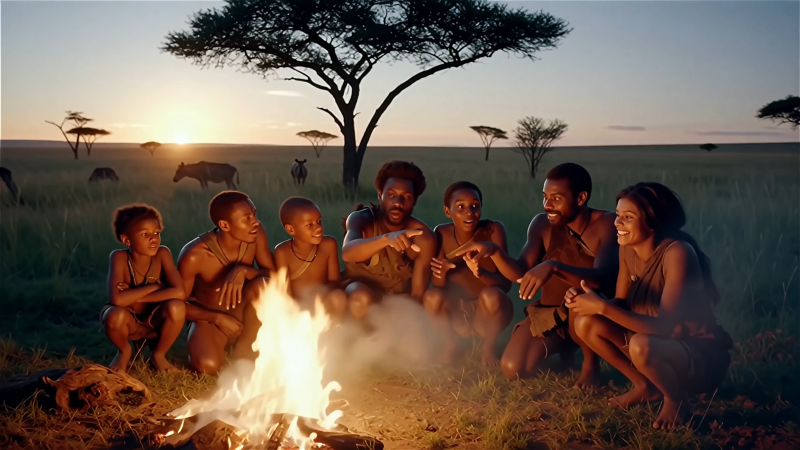
The Hadza have no cumulative culture, no metallurgy, no writing, no cities. On the other hand, in a single afternoon, an AI language model can ingest and synthesize virtually everything humanity has ever expressed through language since behavioral modernity emerged ~50,000 years ago—retracing, at lightning speed, the very path that once took our species tens of thousands of years to walk.
Can we find the seeds of that difference hidden inside our languages themselves?
From Hunter-Gatherers to Mars: What Changed?
Language is civilization’s foundation—without it, nothing else exists. But go back 40,000 years, and hunter-gatherers might have exchanged only a few words. Picture two chiefs meeting: "Which language do you speak?" "What's a language?" A conversation that never happened, but makes you wonder how it all began.
Humans certainly used gestures and mimicry, and probably exchanged some words—even very simple sentences. Behavioral modernity is the name given to complex cognitive patterns, including the beliefs and behaviors that eventually led to our modern world.
Ever wonder if all humans once spoke the same mother tongue? Scientists call it “proto-world,” but we can’t prove it—writing is only 6,000 years old. The idea that our ancestors shared one language during the Out-of-Africa exodus 50–60,000 years ago (when we were still mixing DNA—and maybe words—with Neanderthals and Denisovans) is a tantalizing “maybe.” Reconstructing a 50,000-year-old language is impossible with today’s tools, so we’re taking a sharper route: using linguistics, ancient DNA, comparative mythology, and AI like forensic detectives to recover lost history from more recent eras… and perhaps snag a handful of real ancient words that let us hear how early humans thought, connected, and built their vanished worlds.
Ancient DNA has revealed lost ancestries—Ancient North Eurasians who migrated globally, Early European Farmers who reshaped a continent, and Caucasus Hunter-Gatherers and Ancient East Asians who crossed vast distances. For 50,000 years, these waves of people mixed with locals, yet their impact on the world’s languages and cultures remains a barely-explored frontier. Only a few papers, mostly on Indo-European origins, have begun to scratch the surface.
The Deep Roots of Sound Symbolism
Early communication was probably heavy on gestures and simple sound symbolism — certain sounds just “feel” right for certain meanings. The easiest example: babies make /m/ while nursing → “mama” words everywhere. These biases aren’t hard-wired (not every language uses /m/), but cultural evolution amplifies them. Over millennia the words get buried under layers of change, yet faint echoes survive in basic vocabulary — exactly the kind of patterns modern math and AI can now detect.
Words That Travel the Globe
"Coffee" and "chocolate" appear in nearly every language today—modern loanwords that prove how powerfully terms travel. "Orange" started its global journey thousands of years ago. Ancient words moved just as forcefully, and tracking their spread lets us solve linguistic puzzles hidden in plain sight.
But beyond borrowed words lie deeper patterns: sound-meaning links that appear even in completely unrelated languages. I only stumbled upon this groundbreaking 2016 study — nine years late — in the summer of 2025, when Perplexity pointed me to it. Coming from the Max Planck Institute and others, it lined up with ideas I had already been developing about consonants carrying inherent meaning in prehistoric times.
Using mathematical techniques like statistics, researchers have proposed reconstructions of words spoken up to 15,000 years ago (Pagel et al., 2013). While we can't be certain without written texts, these models give us a probabilistic glimpse into the deep past. There are other ways to go back in time using linguistic tools and I will present my ideas and see if they can be inferred from multiple methods.
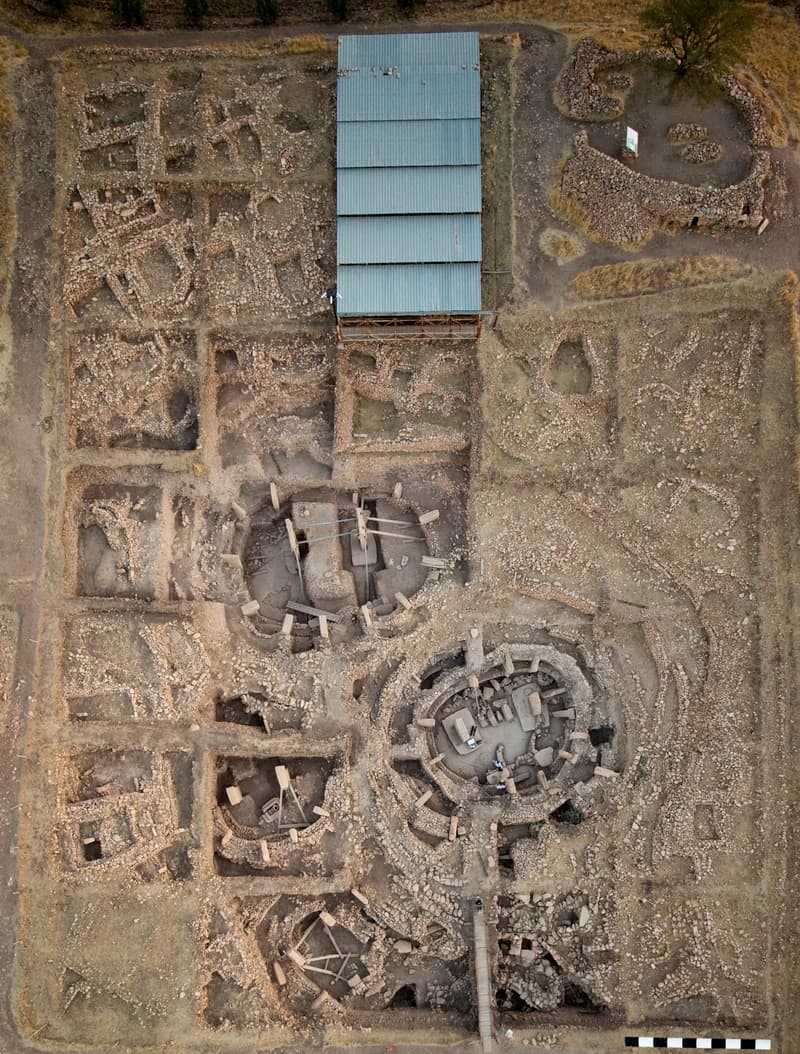
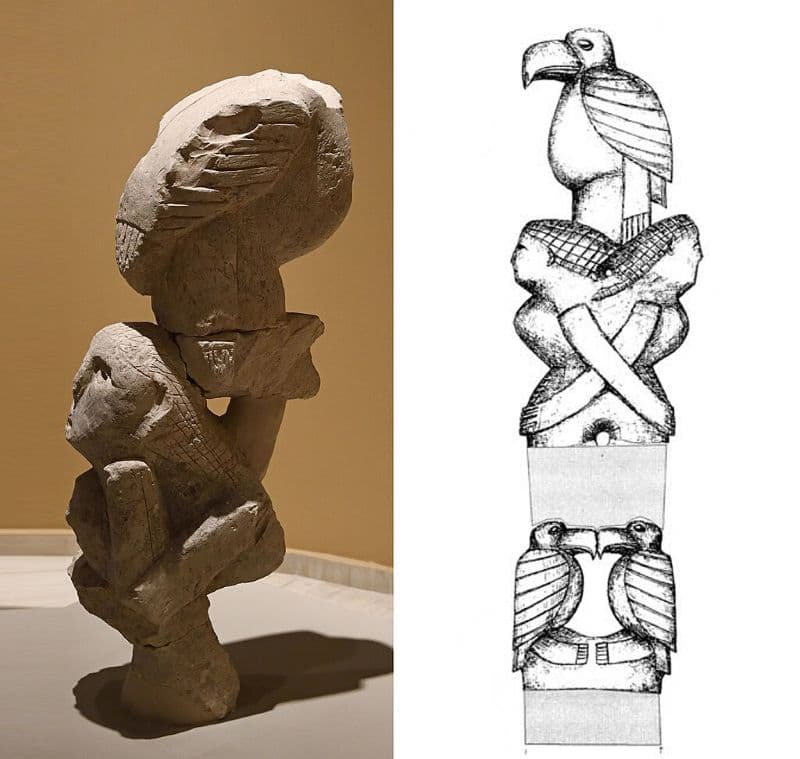
What Did the Builders of Göbekli Tepe Call Their Sacred Sites?
What did Göbekli Tepe's builders call their sacred site? Specialists say we'll never know without writing. But linguistics, mythology, ancient DNA, and early written records can generate testable hypotheses. Recurring motifs in Indo-European and Anatolian myths might preserve faint echoes of Neolithic cosmological vocabulary. We won't recover exact 12,000-year-old words, but we can reconstruct probable concepts like "ancestral gathering place." Modern computational phylogenetics and migration models now give us the tools to try—if we're honest about the speculative leap.
This would actually give us the ability to do research from both directions like digging a tunnel from both sides—one going forward from ancient history and the other backward from the modern era—meeting somewhere in between.
Why Language Origins Matter for Us
Languages are treasure troves of the human past. They can reveal ancient beliefs, lost cultural interactions, and unknown relationships between peoples—no fiction, just multidisciplinary detective work. Test one discovery against another, and the puzzle pieces either fit or they don't.
Language origins matter for AI too, in two ways: philosophy (comparing language evolution to AI outputs) and as a benchmark for testing "World Models." I expect AI will generate its own origin theories soon; this blog offers a human-curated, multidisciplinary yardstick to measure them against.
The boundary between probabilistic and deterministic methods may well be defined as human intelligence, and language is the main manifestation of it.
Some sounds/words are civilizational. One example is the existence of the word for mom in all languages. There are structural commonalities across world languages: the distinction between verbs and nouns, or common word orders like Subject-Object-Verb. All humans may have spoken one language in the distant past before paths diverged — or, as likely if not more, multiple proto-languages emerged early and interacted over time. Needless to say it is very speculative at the moment but there are sound arguments made by linguists, like comparing pronouns across languages (Babaev 2009) that many of the world languages are connected. They call these proposed macrofamilies Eurasiatic, Nostratic, Borean, and others — controversial groupings that remain debated but continue to spark serious inquiry. We'll see whether this is true—through a combination of published research, my own investigations, and AI to test our findings.
A Groundbreaking Discovery Hidden in Plain Sight
Here's one striking example: Blasi et al. (2016) used mathematical methods to discover 74 words with sound-meaning links, each appearing in hundreds to thousands of the 4,000 languages studied—minimizing academic bias through statistics.
These words show varying degrees of similarity across languages. For example, words for "tongue" often contain an "l" or "u" sound, and words for "nose" often include an "n" sound. The relationship can't be coincidence. Check your own language: does the word for nose have an "n", tongue an "l", or round an "r"?
The LA Times covered it: "In world's languages, scientists discover shared links between sound and meaning".
I only discovered this research in summer 2025—nine years late—through an AI model (Perplexity). My own work had already pointed toward a relationship between consonant sounds and meaning. It's amazing these patterns persisted for millennia. How many others were lost to time?
One big human family with all the differences in the world.
This is the frontier we're exploring. Join me as we dig into the evidence, challenge established views, and piece together the story of our past.
Copy the article and paste it into any AI (Grok, Deepseek, Gemini, Qwen, Claude, Kimi, …) and ask it to verify, challenge, or expand.

Mehmet Kurtkaya
Independent researcher exploring language origins through ancient DNA, linguistics, mythology, and AI-assisted verification. Final responsibility for everything here is mine. @mkurtkaya
AI note
I use several large language models—including Grok, DeepSeek, Kimi, and others—for research assistance, fact-checking, drafting, and cross-verification. Like all tools, they have strengths and limitations. Final responsibility for the content, interpretations, and any errors remains mine.